



The Science of LED Light Therapy
LED (light-emitting diode) therapy is a non-invasive treatment that uses targeted wavelengths of light to trigger the skin’s natural cellular processes (photobiomodulation) for deep repair and renewal. It effectively addresses a wide range of concerns, including fine lines, hyperpigmentation, uneven texture, and active breakouts.
We have space exploration to thank for its origins. NASA pioneered research into LED technology to support plant growth and accelerate wound healing for astronauts on long missions (Whelan et al., 2000). That breakthrough sparked decades of medical research, eventually bringing clinical-grade light therapy into modern dermatological care.
How it works
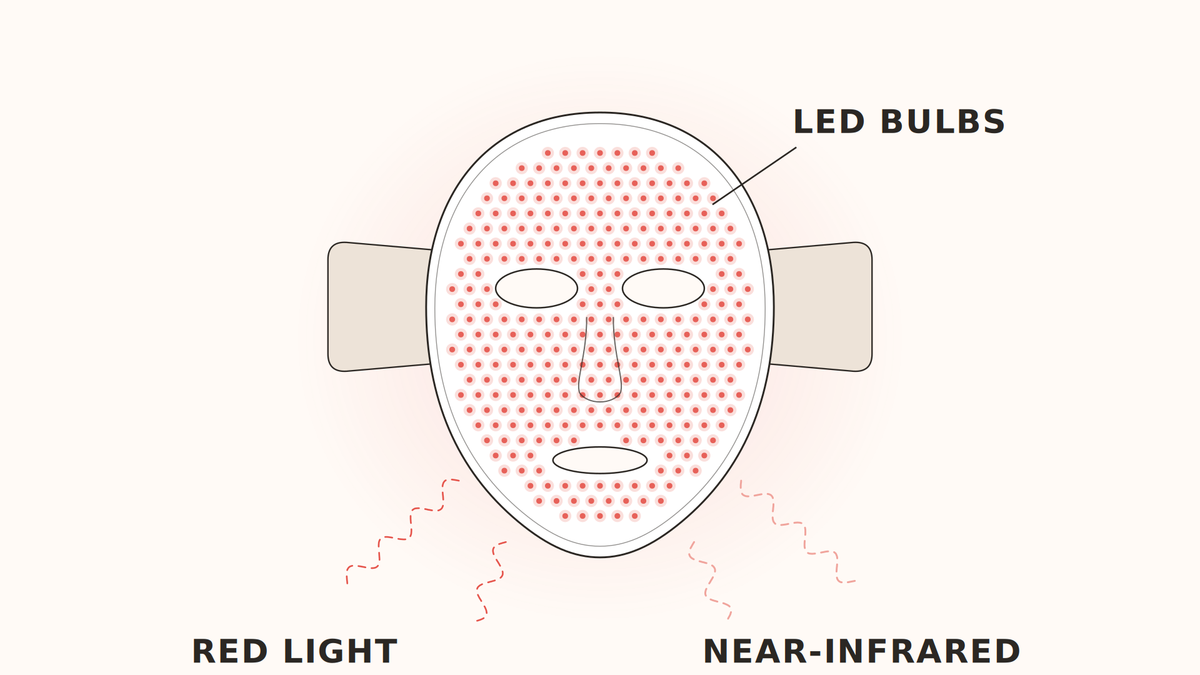
Step 1
Absorption
Red and near-infrared wavelengths release focused light particles called photons. Once these photons pass beneath the surface, they are captured by cytochrome c oxidase (CCO)—a vital enzyme inside your cells' powerhouses (the mitochondria).
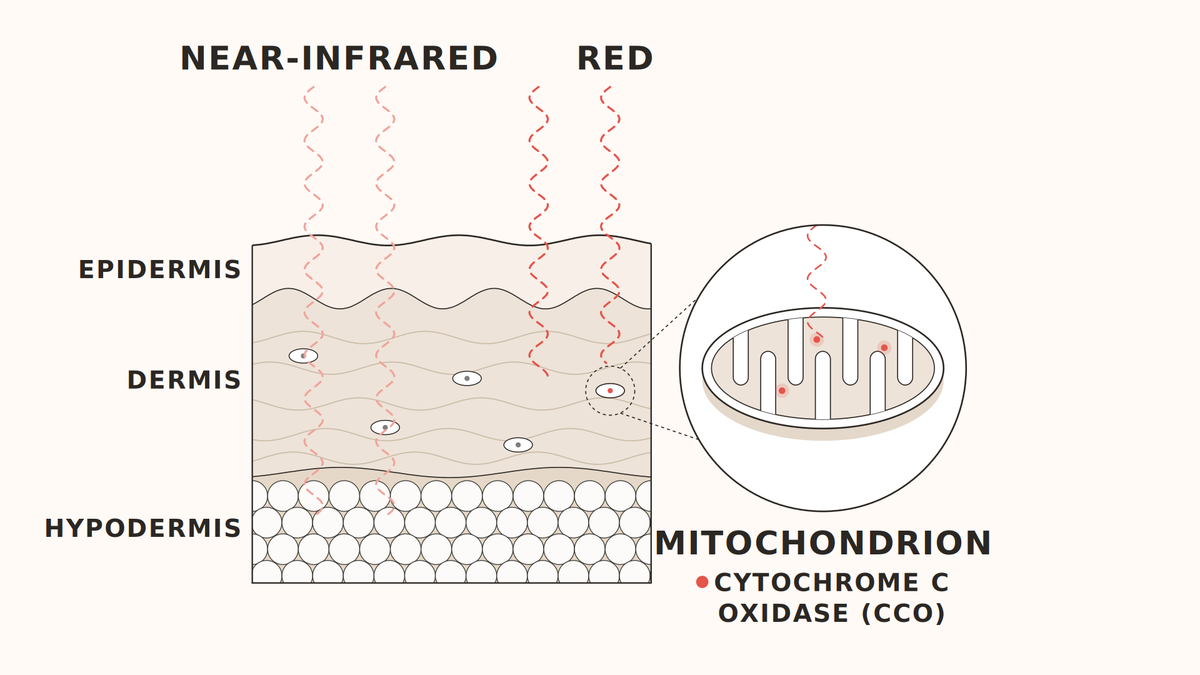
Step 2
ATP Production
This absorption activates cytochrome c oxidase (CCO) and fuels the electron transport chain, turning oxygen and essential nutrients into Adenosine Triphosphate (ATP)—the ultimate biological energy source that powers deep skin renewal and repair.
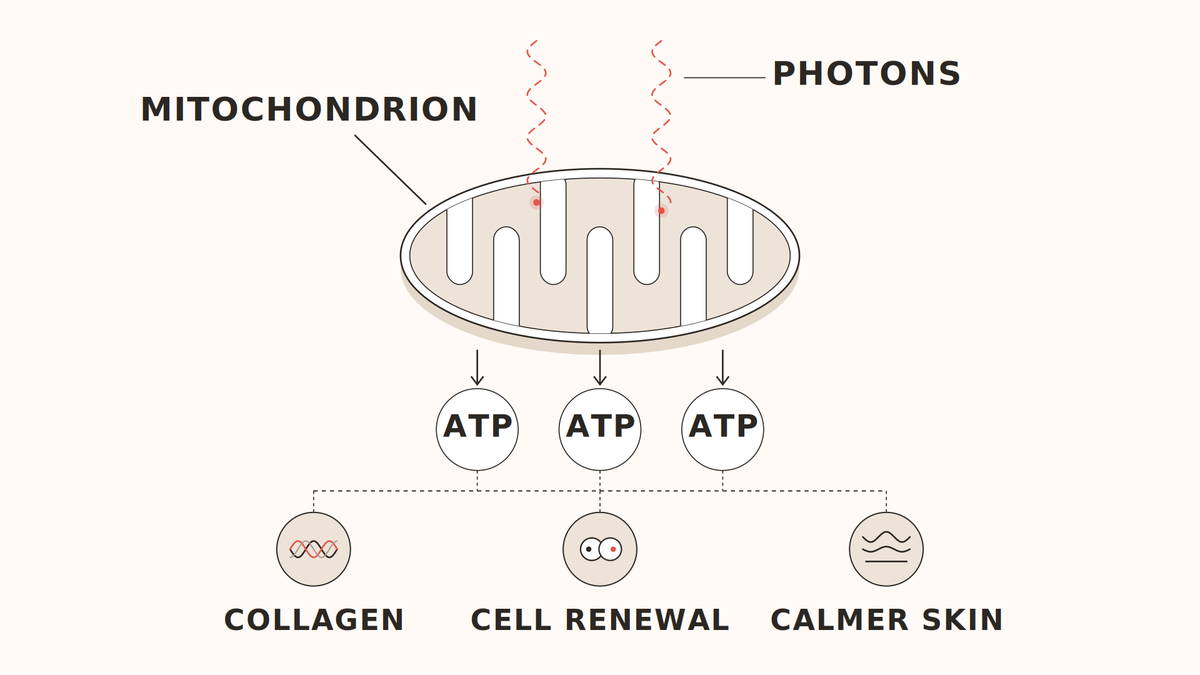
Step 3
Cellular Response
This elevation in ATP, or cellular energy, acts as fuel to power vital metabolic processes—stimulating cell division, accelerating tissue regeneration, and restoring healthy cellular balance. In response, these activated cellular signals trigger fresh collagen production, calm inflammation, and promote noticeably firmer, healthier skin.
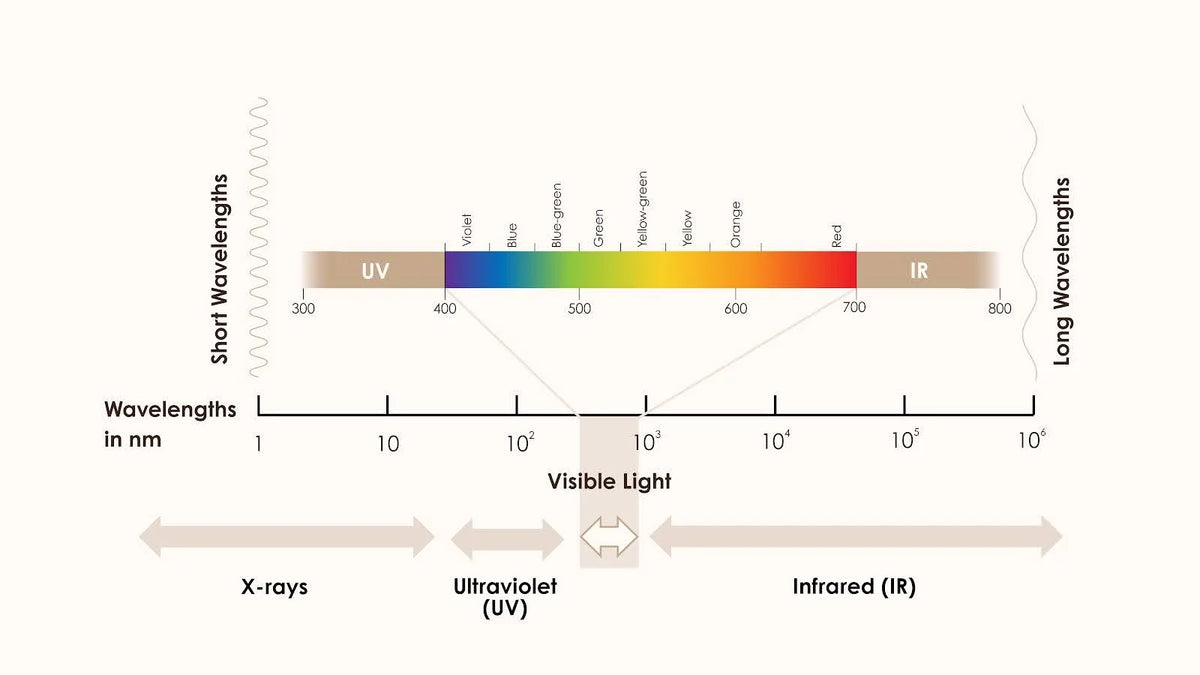
Wavelengths
Wavelengths are the vibrant colors of visible light that the human eye can see. They're measured in nanometers (nm), which is a fancy way of talking about their size. When it comes to LED light therapy, picking the right wavelength is crucial for getting the best results.
That's why it's important to find the best color wavelength for your skin goals. For example, if you're targeting wrinkles, look for red light in the range of 633nm and 670nm. This range delivers beneficial effects without any known side effects. It's like finding the perfect balance between effectiveness and safety for your skin. For even more advanced LED light therapies, consider combining colors to maximize results. For instance, pairing red light with a wavelength of 633nm and near-infrared light (NIR) at 830nm can enhance the efficacy of your treatment.
The Right Dose
Think of light as food for your cells. Dosing means delivering the right amount of light energy to your skin, and three factors determine that dose:
- Power (Irradiance): How intense the light is.
- Time (Seconds): How long the light stays on your skin.
- Energy (Fluence): The total light your skin receives per session.
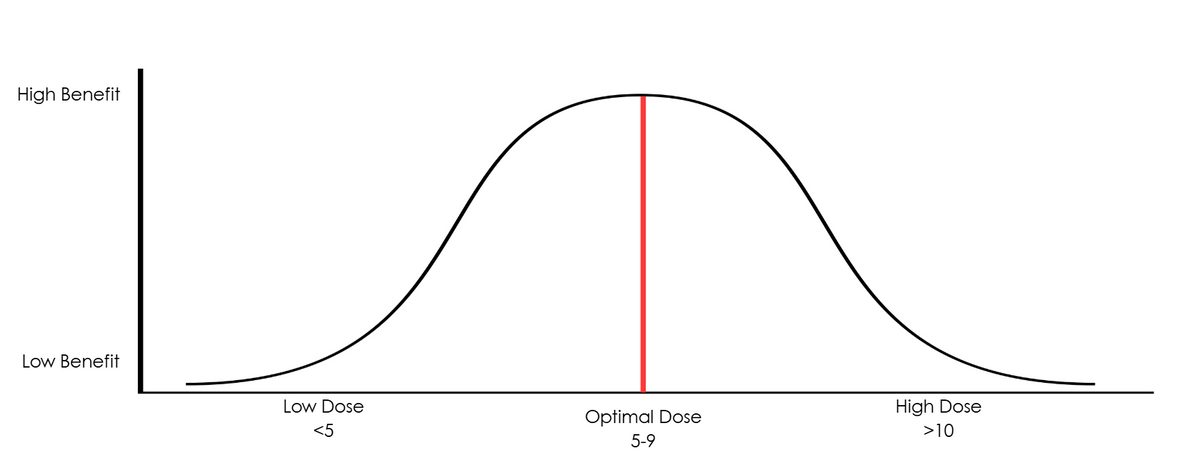
Getting that dose right matters more than you might think. Your skin's mitochondria—tiny cellular power generators—slow down with age, stress, and sun damage, causing collagen loss, wrinkles, and slow healing. Red light therapy recharges them, boosting ATP (cellular fuel) so cells produce more collagen and elastin for firmer, younger skin. But the amount of light makes all the difference:
- Low Dose: Nothing turns on—no change.
- High Dose: Cells overwhelm and shut down—progress halts.
- Optimal Dose: Cells energize—collagen and repair speed up.
So how do you land in that optimal zone? It comes down to simple math. The total energy hitting your skin (in Joules) is just Power × Time:
Dose (J/cm²) = Power (mW/cm²) × Time (seconds) / 1000
For example, take a device with 30 mW/cm² used for 3 minutes (180 seconds):
- 30 × 180 / 1000 = 5.4J/cm²
That's a total dose of 5.4 J/cm²—the perfect therapeutic amount for daily skin care.
Clinical Studies
Mechanisms and Applications of the Anti-Inflammatory Effects of Photobiomodulation (2017) – https://pmc.ncbi.nlm.nih.gov/articles/PMC5523874/
Low-Level Light Therapy of the Eye and Brain (2011) – https://pubmed.ncbi.nlm.nih.gov/21833163/
The Molecular Mechanisms of Action of Photobiomodulation Against Neurodegenerative Diseases (2020) – https://pubmed.ncbi.nlm.nih.gov/33301129/
Low-Level Laser (Light) Therapy in Skin: Stimulating, Healing, Restoring (2014) – https://pmc.ncbi.nlm.nih.gov/articles/PMC3926176/
Effectiveness of a Radiofrequency Device for Rejuvenation of Aged Skin at Home (2022) – https://link.springer.com/article/10.1007/s13555-022-00697-y
Objective Assessment of Skin Rejuvenation Using Near-Infrared 1064-nm Neodymium: YAG Laser in Asians (2011) – https://pubmed.ncbi.nlm.nih.gov/22105015/
Role of Photobiomodulation Application Frequency in Facial Rejuvenation: Randomized, Sham-Controlled, Double-Blind Trial (2025) – https://link.springer.com/article/10.1007/s10103-025-04383-1
User Reported Satisfaction for Light Emitting Diodes Under-Eye Rejuvenation (2024) – https://link.springer.com/article/10.1007/s00403-024-03254-z
Regulation of Skin Aging and Collagen Synthesis by Light-Emitting Diodes (2007) – https://www.sciencedirect.com/science/article/abs/pii/S1011134407000632?via%3Dihub
Body Contouring Effects of At-Home Beauty Device Equipped with Suction, Radiofrequency, and EMS Functions (2024) – https://www.sciencedirect.com/science/article/pii/S0365059624002010
Far-Red/Near-Infrared Light-Induced Cellular Signal Transduction Mechanisms (2015) – https://www.jidonline.org/article/S0022-202X(15)34174-9/fulltext
Light-Emitting Diodes Induce Mitochondrial-Mediated Biological Effects (2021) – https://www.jidonline.org/article/S0022-202X(21)00157-3/fulltext
Mitochondrial Mechanisms of Photobiomodulation in Human Skin Cells (2019) – https://www.jidonline.org/article/S0022-202X(19)31012-7
Wavelength Dependence and Action Spectrum in Light Therapy (2024) – https://onlinelibrary.wiley.com/doi/full/10.1111/jocd.16307
Photobiomodulation and Systemic Physiological Response Mechanisms (2020) – https://pmc.ncbi.nlm.nih.gov/articles/PMC7738953/
Biological Effects of Low-Level Light on Human Skin Fibroblasts (2007) – https://www.sciencedirect.com/science/article/abs/pii/S030698770700028X?via%3Dihub
A Comparative Study Between Once-Weekly and Alternating Twice-Weekly Regimen Using Blue (470 nm) and Red (640 nm) Light Combination LED Phototherapy for Acne Vulgaris (2021) – https://pubmed.ncbi.nlm.nih.gov/33538345/
Efficacy of Blue Light Therapy and Photodynamic Therapy in Acne Vulgaris (2012) – https://pubmed.ncbi.nlm.nih.gov/22105015/
Frequently Asked Questions
630nm red light wavelengths penetrate the epidermal skin layer to boost collagen production and smooth fine lines
Unlike many topical treatments, LED light therapy is a gentle and non-invasive treatment option making it suitable for all skin types.
If you take certain medication that increases your sensitivity to light or have had any serious skin or eye conditions it is best to consult a healthcare professional before starting LED light therapy treatments.
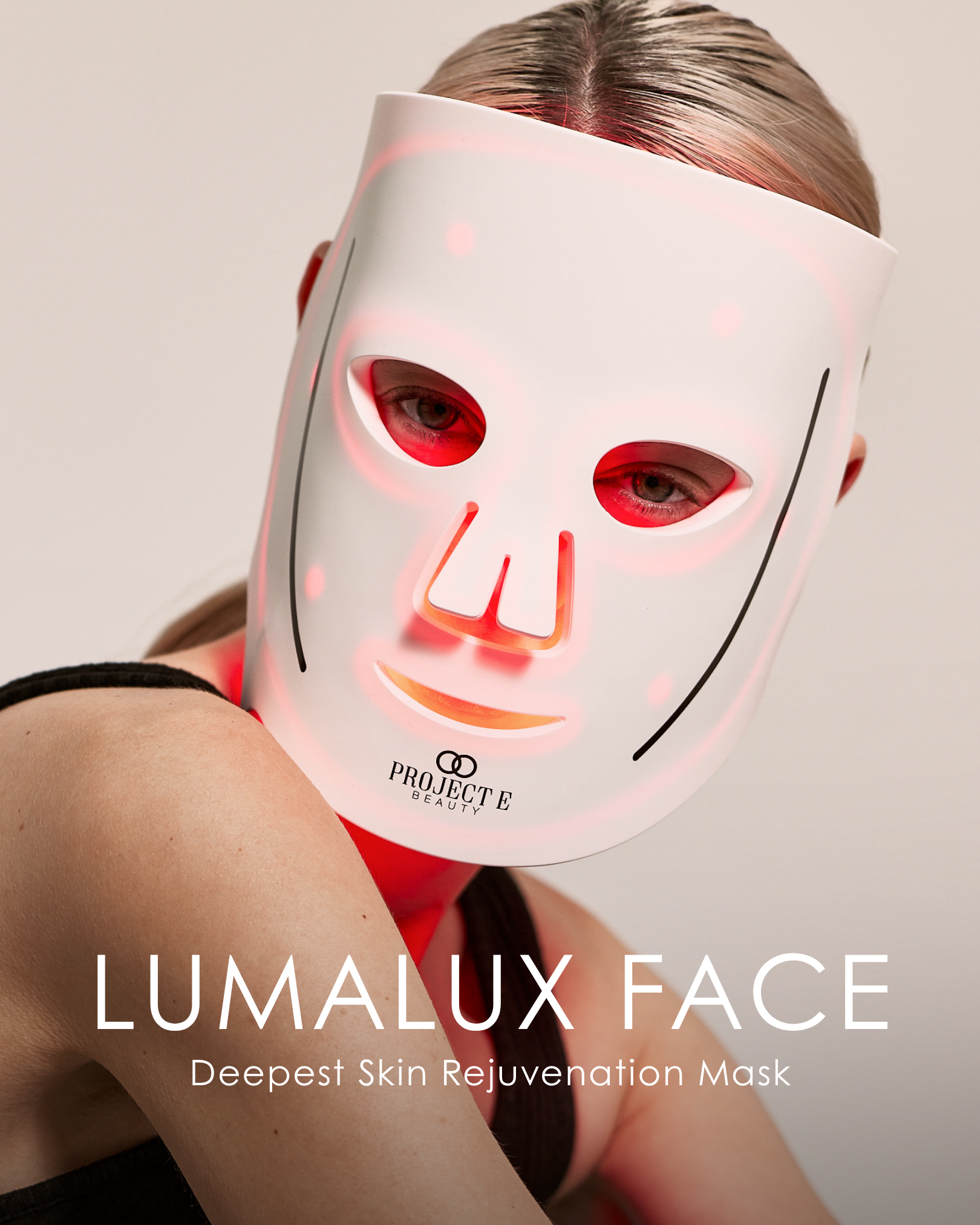
Like all electronic devices, LumaLux Face emits a small amount of non-ionizing electromagnetic fields (EMF). However, it is certified under IEC 60601-1-2, an international safety standard for electromagnetic compatibility (EMC) in medical electrical equipment.
Results vary depending on the concern addressed. Relief from acne-prone skin, redness, and irritation may be immediate, while the long-term collagen-boosting impacts of red and infrared light therapy may take 2-3 months to take effect fully. Consistency of treatment is key to long-term and sustained skin results
Not all devices deliver light evenly, and the key to consistent results is LED density and beam overlap.
When LEDs are spaced too far apart or too few, their beams don't touch—leaving patches of skin that get zero energy and go untreated.
High-density devices pack hundreds of LEDs close together so their light cones cross and overlap, giving every millimeter of your face the same therapeutic dose. This ensures your cheeks, forehead, and jawline all build collagen at the same rate, preventing patchy improvement.