




How Often Should I Use Red Light Therapy to Supercharge Collagen Production?
IN THIS ARTICLE
- 01 How Collagen Works?
- 02 What Is Red Light Therapy?
- 03 What Happens to Collagen When You Age?
- 04 How Can Red Light and Infrared Light Support Collagen?
- 05 Which Wavelengths Matter Most?
- 06 How Often Should You Use Red Light Therapy for Collagen?
- 07 How Soon Will You See Results?
- 08 Using Red Light at Home
- 09 Conclusion
Collagen is the super-plumping protein responsible for keeping skin firm, smooth, and resilient. But from our mid-20s onwards, collagen production naturally declines — roughly 1% per year. Over time, our skin starts to thin, settling into fine lines and creases.
Red light therapy (RLT) is the secret weapon for age management — you can stimulate collagen from the comfort of your own home without any downtime. But one question comes up again and again: how often should you use red light therapy?
Let’s break it down in a way that’s both science-backed and easy to apply to your routine.
How Collagen Works?
The powerhouse in our cells (mitochondria) has a battery called ATP (adenosine triphosphate). When the battery runs low, our collagen-producing cells (fibroblasts) go on strike: energy production drops and collagen fibres break down faster than they’re replaced. Our skin starts to sag and lose its bounce.
What Is Red Light Therapy?

Red light therapy uses specific wavelengths of visible red and invisible near-infrared light to stimulate fibroblasts without heat. Unlike UV light, which damages collagen, these wavelengths are non-thermal and non-invasive. Unlike microneedling, which breaks the surface of the skin, RLT works from the inside out — stimulating fibroblasts at a cellular level.
In simple terms: the light recharges fibroblasts like charging a mobile phone.
If you’re curious about how infrared differs from red light specifically, check out our deep-dive on the difference between infrared and red light therapy.
What Happens to Collagen When You Age?
Collagen declines for several reasons:
- Intrinsic ageing: cellular slowdown over time
- UV exposure: breaks down existing collagen fibres
- Oxidative stress: from pollution, stress, and lifestyle
- Inflammation: accelerates breakdown
- Lower cellular energy: less ATP for repair
While there’s no miracle cure for ageing, recharging fibroblasts with targeted light can make a meaningful difference over time.
How Can Red Light and Infrared Light Support Collagen?
Red and near-infrared light support collagen through several complementary pathways:
- Boosting ATP production: more cellular energy for repair
- Stimulating fibroblasts: enhanced collagen production
- Improving circulation: better delivery of oxygen and nutrients
- Reducing inflammation: chronic inflammation accelerates collagen loss
Want to understand how much therapy is too much? Read what happens if you overdo LED light therapy to use your device safely and confidently.
Which Wavelengths Matter Most?
Different wavelengths reach different skin depths:
- Red light (~630–660 nm): targets the dermis, where fibroblasts live
- Near-infrared (~830–880 nm and beyond): reaches deeper tissues to support circulation and soothe inflammation

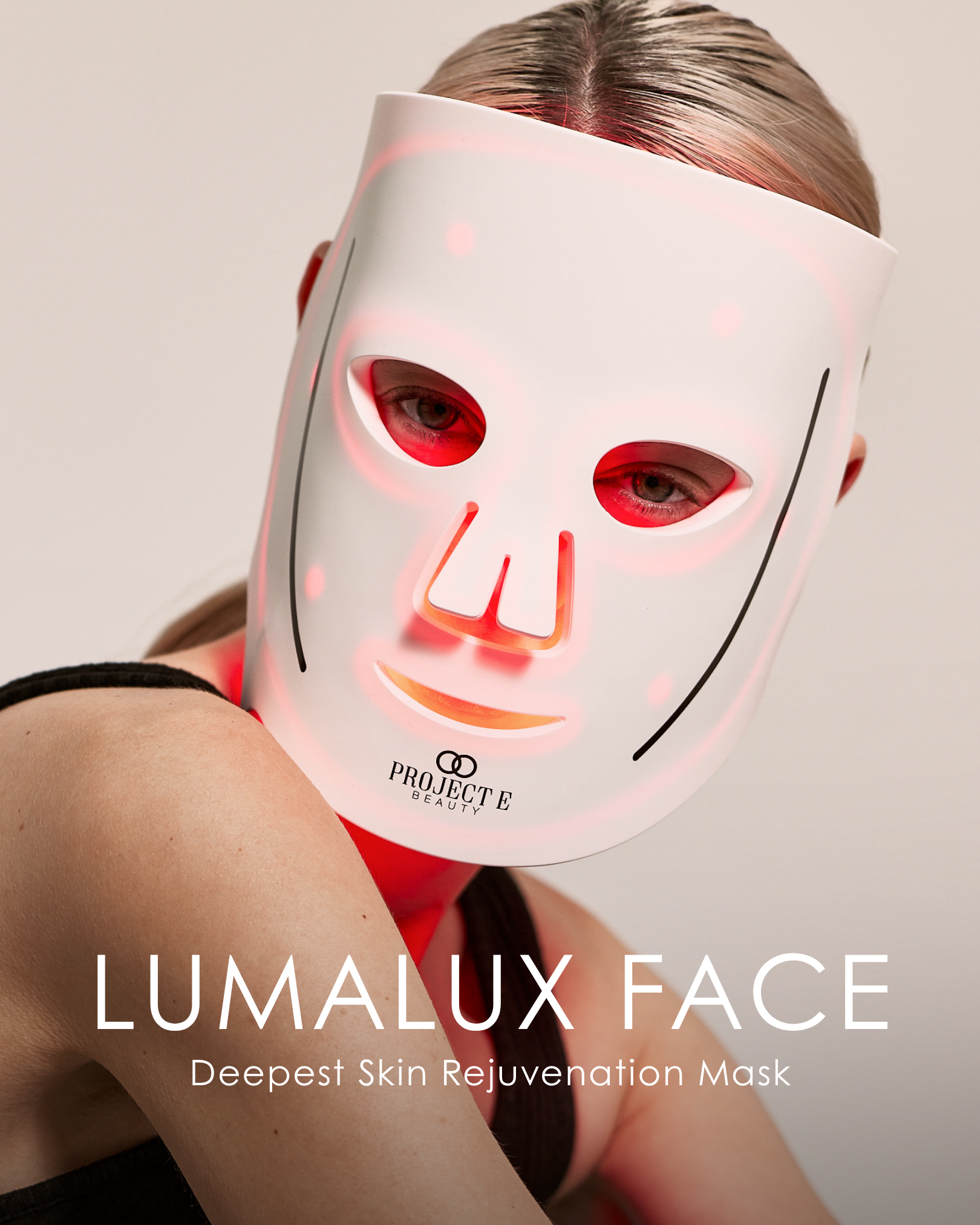
Devices like the Project E Beauty LumaLux Face Pro LED Light Therapy Mask combine multiple clinically relevant wavelengths to support skin at various depths.

LumaLux Face | Pro LED Red Light Therapy Mask
Our most advanced LED mask for deeper skin renewal - fine lines, acne, hyperpigmentation, skin texture
This multi-wavelength approach brightens the surface of the skin, calms reactive skin, and strengthens the deeper collagen scaffolding.
How Often Should You Use Red Light Therapy for Collagen?
There’s no one-size-fits-all answer — and that’s an important distinction. The ideal frequency depends on the device’s power output, irradiance, and overall efficiency.
Rather than focusing on exact numbers, it’s more helpful to think in weekly frequency ranges and short, consistent sessions.
General weekly guidelines
For most users:
- 3–5 sessions per week
- Session length varies by device strength
High-quality, higher-powered devices — such as the Project E Beauty LumaLux Face — typically require only 3–6 minutes per session to deliver effective light energy, thanks to their efficiency and optimized irradiance.
Lower-powered devices may require longer sessions, often in the 10–20 minute range, to reach a similar therapeutic dose.
Red light therapy continues working even after the session ends, sometimes for hours or days. However, skin cells have a biological “response ceiling,” meaning more isn’t always better. Short, regular sessions allow cells to benefit without overstimulation.
Daily use isn’t usually harmful with well-designed devices, but it isn’t necessary for results. If you’re new to red light therapy, starting with 3 sessions per week and adjusting based on your skin’s response is a balanced, sustainable approach.
How Soon Will You See Results?
Red light therapy is cumulative — it works with your biology rather than forcing immediate change. Generally:
- 2–4 weeks: skin looks brighter and calmer
- 6–8 weeks: texture feels smoother, hydration improves
- 8–12 weeks: visible firmness and reduced fine lines
Think of red light therapy as a long-term skin health tool — like exercise for your cells.
Using Red Light at Home

Not everyone can commit to monthly clinic treatments. At-home devices like the Project E Beauty LumaLux range are designed to fit seamlessly into your routine, making consistency achievable.
Whether you’re using a face mask, neck mask, or a larger face and body device, the key is regular use over time.
LumaLux Face | Pro LED Red Light Therapy Mask
Our most advanced LED mask for deeper skin renewal - fine lines, acne, hyperpigmentation, skin texture

LumaLux Neck & Dec | Pro LED Red Light Therapy Mask
Target fine lines, sagging and other signs of aging on the neck and dec with 800 high-powerd LEDs for superior results

LumaLux Dome | Face & Body LED Red Light Therapy Device
8 wavelength full body LED light therapy device for skin rejuvenation, fine lines, acne, muscle recovery and mood boost

Alora | Age Renewal LED Light Therapy Panel
Target up to 5 skin layers with advanced blue, infrared and red light therapy contour panel
Conclusion
We can’t drink collagen — we need to make it. Red light therapy works with your body to stimulate collagen naturally by energising cells and supporting the skin’s repair processes.
Used consistently over weeks and months, red light therapy becomes more than a beauty trend. It’s a proactive, science-backed way to support long-term skin health — with just a few minutes of light and a little well-earned ‘me time’.


Leave a comment
This site is protected by hCaptcha and the hCaptcha Privacy Policy and Terms of Service apply.